Commercial Water Damage Restoration Orlando, FL
Water damage in a commercial building can reduce revenue and halt operations. Our IICRC‑certified crews work around your schedule. They reduce downtime and keep the guest experience smooth. They also record the data your insurer needs.
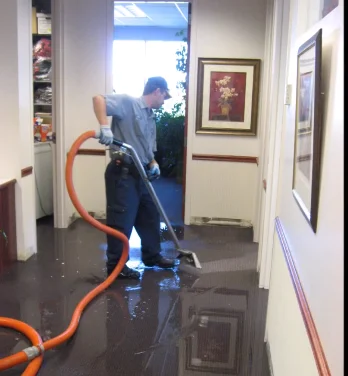
Why Commercial Water Damage Restoration in Orlando Requires a Specialist?
Commercial water damage restoration differs from residential restoration in four ways. First, the scale can be large. A hotel might have over 100 rooms affected at the same time. Second, businesses cannot stay closed for long. A restaurant usually cannot be closed for five days. Third, insurance policies vary. A commercial property policy is not the same as an HO‑3 homeowner policy. Fourth, you must follow health department standards. You also need to meet building codes. Industry rules apply as well.
DryGuard completed water damage repairs at hotels near International Drive. The crew serviced medical offices in Lake Nona. They also worked at restaurants on Sand Lake Road. In addition, they handled office buildings in Maitland. They know what keeping a business running means.
Is water damage covered by commercial property insurance in Florida?
A commercial property insurance policy usually covers water damage from sudden internal sources. This includes burst pipes, sprinkler failures, and roof leaks caused by storms. You can add business interruption coverage. It pays lost revenue while the property is being repaired. Flood damage is not covered by a CP policy. You need a commercial flood policy, either through the NFIP or a private carrier. Mold coverage differs a lot between policies. Check your endorsements.
How can you repair water damage in a commercial building while keeping it open?
We split the damaged area into containment zones. We finish mitigation and drying one zone at a time, keeping clean areas running. In hotels, we clean one block of rooms each night. In restaurants, we work when the kitchen is closed. In hospitals, we help staff follow patient schedules and infection-control rules. First, we make a detailed schedule so problems do not arise later.
Orlando Commercial Water Damage: Industry by Industry
🏨 Hotels & Hospitality
Guest experience is revenue. We work overnight, room-by-room, to minimize occupied room count reduction. Fast extraction and drying protocols are sized for multi-floor events. Experience with I-Drive corridor properties.
🍽️ Restaurants
Follow the health department rules during restoration and after the work finishes. Follow the protocol for commercial kitchen equipment. Schedule work around regular service hours. Plan the steps carefully to keep revenue loss low.
🏥 Medical Facilities
The team works in patient areas and follows HIPAA rules. It manages infection control. It enforces containment protocols and prepares regulatory paperwork to keep the facility compliant.
🏢 Office Buildings
Multi-tenant coordination. After-hours scheduling. IT and data room protocols. Complete documentation for commercial property and business interruption claims.
🏪 Retail
Inventory documentation and protection. Customer access is maintained during containment. Fast-track drying to minimize loss of sales floor. Insurance scope for contents damage.
🏗️ Industrial / Warehouse
The job involves removing water. It also includes installing drying equipment in high‑ceiling areas. The worker must protect inventory and equipment. They must record the items. The role requires working with operations management.
Commercial Water Damage in Orlando? We Minimize Your Downtime.
24/7 commercial emergency response across Central Florida. We work around your operational schedule to minimize disruptions. We document everything related to your commercial property insurer. Our goal is to have your business back up and running as soon as possible.
Commercial Water Damage Restoration Orlando: How We Minimize Business Interruption
Every hour your Orlando business is out of operation costs money. A restaurant dark during dinner service loses thousands. A hotel with blocked rooms loses room nights that cannot be recovered. We design our commercial restoration around your operational schedule — not ours.
Hotels & Short-Term Rentals
Room-by-room zoned restoration keeps unaffected inventory operational. We work one block of rooms per night, returning them to service as we complete each zone. Guest-facing areas are prioritized. We coordinate with your front desk on room availability in real time.
Restaurants & Food Service
We schedule work during non-service hours — between closing and opening prep. Health department documentation for reopening is part of our standard commercial package. We understand the inspection requirements and build the paperwork you need.
Office Buildings
After-hours and weekend scheduling to avoid business disruption. Minimal equipment noise during working hours using quiet-mode dehumidifiers when needed. Full commercial insurance documentation including business interruption loss records.
Retail & Warehouse
Inventory protection protocols during water extraction and drying. We assess inventory salvageability and provide documentation for loss claims. Warehouse concrete subfloor drying uses our desiccant systems — no exposed framing to protect.
Medical & Healthcare Facilities
HIPAA-aware operations. Infection control protocols align with healthcare environment requirements. We coordinate with facility management to maintain patient safety during restoration without closing departments unnecessarily.
I-4 Corridor Commercial Properties
The I-4 corridor from Daytona to Tampa runs through Orlando's commercial core. We've restored office parks, industrial facilities, and mixed-use developments along this corridor. Familiar with the construction vintage and mechanical systems typical in this zone.
Commercial Water Damage Documentation for Florida Business Insurance
Commercial property insurance claims are more complex than residential claims. Your CP policy has different provisions for business interruption, equipment loss, inventory damage, and mold coverage limits than a standard homeowners policy.
What Our Commercial Documentation Package Includes
- ✓ Moisture mapping with GPS coordinates for large floor plans
- ✓ Daily moisture logs with equipment readings at each test point
- ✓ Before/after photographic documentation by zone
- ✓ Cause-of-loss written narrative for adjuster submission
- ✓ Business interruption period documentation with timeline
- ✓ Inventory damage assessment (if applicable)
- ✓ Equipment contamination assessment
- ✓ Florida Statute compliance documentation for mold work
Important for Orlando commercial landlords: Florida Statute §83.51 requires landlords to maintain habitable conditions. A commercial tenant experiencing business interruption from water damage may have claims against building owners if restoration is delayed. Acting quickly is both good business and legal protection.
Commercial Restoration Pricing — Orlando (2026)
Small office suite (under 2,000 sq ft): $3,000–$8,000
Restaurant or retail (2,000–5,000 sq ft): $6,000–$18,000
Hotel (per floor, 10–15 rooms): $12,000–$35,000
Large facility / warehouse: custom quote
Commercial Water Damage in Your Orlando Business? Every Hour Counts.
IICRC-certified commercial restoration with schedule-aware operations across the I-4 corridor and all of Orange County. One call gets crews moving — 24/7, nights, weekends, holidays.
Commercial Water Damage Insurance Documentation — What's Different
Commercial property water damage claims in Florida involve a fundamentally different insurance landscape than residential claims. Business owners who approach a commercial water damage claim the same way they would a residential claim often leave significant money on the table or trigger claim disputes that delay recovery for weeks. Here is what changes in a commercial context:
Commercial Property Policy vs. HO-3
Commercial property policies (ISO CP forms) are structured differently from residential HO-3 policies. The coverage triggers, exclusion language, and claims process differ in important ways. Commercial policies typically cover building, business personal property (BPP), and loss of income (business interruption) as separate coverage parts. Each part requires separate documentation and has different adjustment timelines. DryGuard's commercial restoration documentation package addresses all three coverage parts simultaneously from the first visit.
Business Interruption Documentation
Business interruption (BI) coverage — which reimburses lost income during the restoration period — is one of the most under-documented and therefore under-recovered commercial insurance coverages after water damage. To trigger BI coverage properly, you need: a certified restoration start date, a documented timeline connecting the water damage to business closure, daily restoration progress records showing why the business remained closed each day, and a restoration completion certification. DryGuard provides all four documents as standard on commercial jobs.
Multiple Insured Parties
Commercial water damage often involves multiple insured parties simultaneously. A retail tenant whose stock is damaged by a roof leak may have a renter's commercial policy. The building owner has a commercial property policy. A neighboring tenant affected by the same event has their own policy. In multi-tenant commercial buildings — common throughout the Orange County business corridors along SR-436, Colonial Drive, and the I-4 corridor — DryGuard coordinates documentation for all affected parties, clearly delineating which damage falls within which tenancy and which policy is the primary payor.
Commercial Adjuster vs. Residential Adjuster
Commercial claims are typically handled by specialist commercial adjusters who are more experienced with documentation disputes and scope negotiation than residential adjusters. Commercial adjusters review scopes more closely and are more likely to request supplemental documentation, IICRC category verification, and equipment justification. DryGuard's commercial scope documentation is written to meet commercial adjuster standards — not the simpler residential claim format that inadequate commercial contractors use.
Business Continuity During Commercial Water Damage Restoration
The most common question commercial clients ask is: "Can we stay open during restoration?" The answer depends on the scope, the category of water, and the nature of the business. DryGuard's commercial restoration approach is designed to maximise operational continuity wherever safely possible.
Often Possible: Partial Operations
Category 1 water damage (clean water) affecting a portion of a commercial space can often allow continued operations in unaffected areas while restoration equipment runs in contained sections. Negative air pressure containment and professional equipment placement can isolate the restoration zone from customer-facing areas.
Depends on Scope: Food Service and Healthcare
Restaurants, medical offices, and food service facilities face regulatory requirements during water damage events — health department notification, food service permit implications, and infection control standards. DryGuard coordinates with business owners on notification requirements and restoration sequencing to minimise regulatory exposure.
Closure Required: Category 3 Events
Category 3 water events — sewage backup, floodwater, or Category 1/2 water left standing for 48+ hours — require complete commercial closure during the biohazard remediation phase. OSHA standards and Florida health codes both apply. The closure period is typically 2–5 days for containment setup, remediation, and clearance testing before re-occupancy.
→ Water damage categories 1, 2, and 3 — commercial implications
→ Florida water damage insurance — commercial property coverage guide