Water Mitigation Orlando, FL — Stop the Damage. Document Everything.
Water mitigation is the critical first phase of water damage response — containing the damage, extracting water, and documenting conditions before anything changes. In Orlando, every minute of unmitigated water damage multiplies restoration cost. Call now.
What Is Water Mitigation — And Why Does It Come Before Restoration?
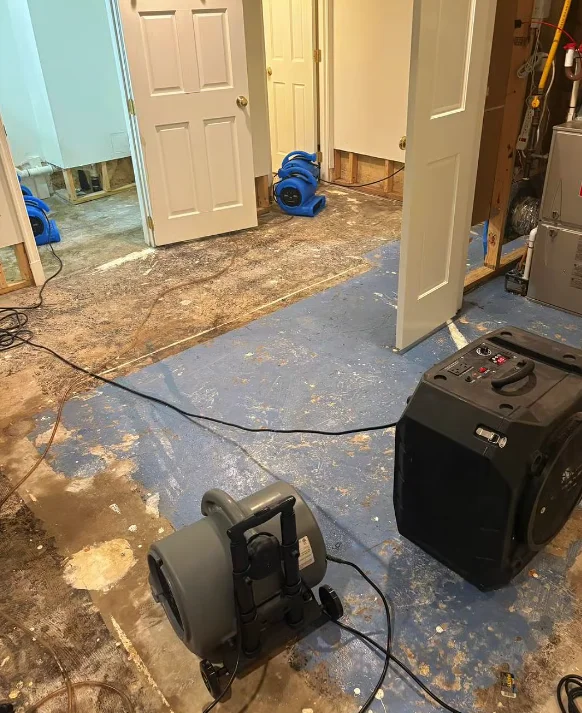
Water damage response has two phases: mitigation and restoration. Mitigation is emergency damage control — stopping active damage, extracting standing water, stabilizing the structure, and documenting everything for insurance. Restoration is the rebuild — drywall, flooring, paint, finish work.
Mitigation must happen immediately. Restoration can wait a few days. Confusing the two — or letting restoration concerns delay mitigation — is one of the costliest mistakes Orlando homeowners make.
Your insurance policy contains a "duty to mitigate" clause. Failing to act promptly to stop further damage can result in your insurer reducing your claim based on the additional damage caused by delayed response. DryGuard's timestamp documentation proves you acted promptly — protecting your full claim payout.
What does water mitigation include in Orlando?
Water mitigation in Orlando includes: emergency dispatch and safety assessment; water source containment; moisture mapping with thermal imaging; initial extraction of standing water; installation of drying equipment (air movers and dehumidifiers); moisture documentation for insurance; daily monitoring visits; and a written scope of damage before restoration begins. Mitigation typically takes 3–5 days in Orlando's humidity to achieve dry standard across all structural materials.
What is the difference between water mitigation and water restoration in Orlando?
Water mitigation stops ongoing damage and dries the structure — it is the emergency and drying phase. Water restoration repairs and rebuilds — replacing drywall, flooring, paint, and any other components removed or damaged. Both are typically covered by homeowners insurance for sudden and accidental events. Mitigation must be completed before restoration begins; starting restoration over wet materials traps moisture, voids warranties, and creates mold conditions behind new finished surfaces.
How much does water mitigation cost in Orlando?
Water mitigation in Orlando costs $860–$1,500 for minor Category 1 events, $1,500–$5,000 for moderate damage with drywall involvement, and $5,000–$15,000+ for major flooding, Category 3 events, or extensive structural involvement. Per square foot: $3–$4 for Category 1, $4–$7 for Category 2, $7–$7.50 for Category 3. Mitigation costs are typically covered by standard homeowners insurance for sudden and accidental events.
The 24-Hour Mitigation Window in Central Florida
National water damage guidelines assume standard mitigation can begin within 24–72 hours. In Orlando, this guidance is dangerously outdated for our climate.
Orlando's 74–77% average relative humidity means wet structural materials are sitting in a sustained mold-growth environment from the moment water enters. Mold colonization begins within 24 hours — significantly faster than the 48–72 hour window in drier US markets.
What this means in practice: mitigation that begins at hour 1 costs dramatically less and achieves dramatically better outcomes than the same mitigation scope started at hour 24 or later. The cost differential between hour-1 response and 24-hour-delayed response is typically 30–50% of total job cost.
Water Mitigation Emergency in Orlando? Call Now.
Every minute of unmitigated water damage costs money in Orlando's humidity. IICRC-certified crews available 24/7. Written estimate before work. Insurance documentation from minute one.
Water Mitigation vs. Water Restoration: What Orlando Homeowners Need to Know
These two terms are often used interchangeably — but they describe different phases of the process, and your insurance policy may treat them differently.
Water Mitigation
The emergency phase: stopping active water damage and preventing it from getting worse. This includes extracting standing water, removing saturated materials, placing drying equipment, and documenting the scene. Mitigation happens in the first 24–72 hours. Insurance treats this as a covered emergency expense under most HO-3 policies — you are legally required to mitigate, and most policies require you to start within a reasonable time of discovery.
Typical cost: $800–$4,000 for mitigation only
Water Restoration
The rebuilding phase: replacing what was removed during mitigation. Drywall, flooring, insulation, cabinetry, paint. This is construction work performed after the structure is fully dry and mold-free. Restoration may require a separate contractor estimate and a second insurance authorization. DryGuard handles both phases as a single project — you don't need to manage two vendors.
Typical cost: $1,500–$15,000+ depending on scope
What Happens During Water Mitigation in Orlando
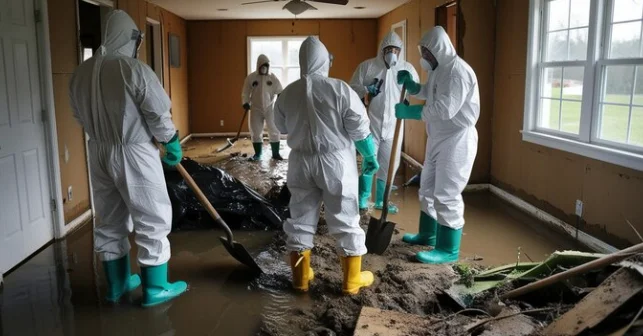
Water mitigation in Orlando looks different from mitigation in drier climates because of the humidity factor. Here's what our mitigation process covers:
- Immediate extraction: Truck-mounted and portable extractors remove standing water before it migrates further into framing and subfloor.
- Moisture mapping: Full documentation of water migration paths — often water travels 8–10 feet from the visible wet area.
- Controlled demolition: Saturated drywall, insulation, and flooring that cannot be dried in place is removed to expose framing for drying.
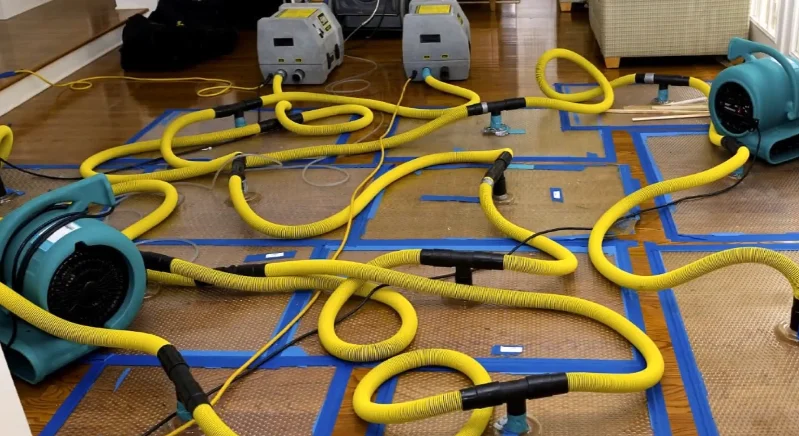
- Equipment placement: Industrial air movers and LGR dehumidifiers placed per IICRC S500 calculations for Orlando's specific humidity profile.
- Insurance documentation start: Every step photographed and moisture-logged from arrival. This record is your claim.
Water Mitigation in Orlando — Start Now, Not Tomorrow.
Your policy's duty-to-mitigate clause means you must start promptly. Delay can affect your claim. DryGuard answers every call 24/7 and dispatches immediately across all of Orange County.
Water Mitigation vs. Water Restoration: The Difference Orlando Homeowners Must Know
These two terms are used interchangeably by many contractors — incorrectly. They describe distinct phases of work with different timelines, different equipment, and critically, different insurance billing codes. Understanding the difference helps you know exactly what you are paying for and what your insurer is approving.
Water Mitigation — Phase 1
Goal: Stop the damage from getting worse. Remove water. Dry the structure to IICRC dry standard. Document everything for insurance.
What it includes:
- Water extraction — truck-mounted or portable units
- Moisture mapping with thermal camera and moisture meters
- Controlled demolition — removing unsalvageable drywall and insulation to allow drying
- Industrial drying equipment placement — LGR dehumidifiers and directional air movers
- Daily moisture readings and drying logs
- Antimicrobial treatment when Category 2 or 3 water is present
- Complete cause-of-loss documentation package for insurance
Timeline: 3–5 days typically. Phase 1 is complete when all materials reach IICRC dry standard.
Insurance billing: Mitigation is billed separately from restoration under most Florida policies. Your insurer approves mitigation costs independently.
Water Restoration — Phase 2
Goal: Rebuild what was removed during mitigation. Return the property to pre-loss condition.
What it includes:
- Drywall replacement and finishing
- Insulation reinstallation
- Flooring replacement — tile, hardwood, carpet, LVP
- Painting and touch-up
- Cabinetry and millwork repair or replacement
- Fixture replacement where damaged
Timeline: 1–4 weeks depending on scope. Cannot begin until Phase 1 is fully complete — attempting reconstruction before achieving dry standard creates mold risk under newly installed materials.
Insurance billing: Reconstruction is billed under a separate line-item scope from mitigation. Many homeowners handle Phase 1 through insurance and Phase 2 through a separate general contractor.
DryGuard specialises in Phase 1 water mitigation. We are not a general contractor — we are a certified restoration company. Our work ends when your structure is certified dry and documented. This separation means your insurer reviews two clean scopes rather than one bundled estimate, which typically results in faster approval and cleaner claims. We work with your preferred general contractor for reconstruction, or can refer you to licensed GCs we work with across Orange County.
When Do You Need Water Mitigation Only — vs. Full Restoration?
Not every water event requires full reconstruction. Understanding which scenario you are in affects your decision on whether to file an insurance claim, your expected total cost, and your timeline for returning to normal living.
Mitigation Only — No Reconstruction Needed
When water is caught within hours, is Category 1 (clean water), and has not saturated structural materials beyond salvageable limits. Example: dishwasher overflow caught the same day on a tile kitchen floor — extraction, drying, and documentation. No drywall removed, no flooring replaced.
Typical cost: $500–$1,500. Often below deductible — out-of-pocket may be preferable to filing.
Mitigation + Partial Reconstruction
When water has reached drywall and requires controlled demolition, but the event is isolated to one area. Example: burst toilet supply line reaching one bathroom and a portion of the adjacent hallway — drywall removal in two rooms, drying, then patch and paint.
Typical cost: $2,500–$6,000 total (mitigation $1,500–$3,000 + reconstruction $1,000–$3,000).
Mitigation + Full Restoration
When water has migrated through multiple rooms, floors, or building systems, or when mold remediation is required before reconstruction can begin. Example: two-story home with burst washing machine line on second floor affecting both floors — multi-room mitigation, mold remediation if timeline allows, then full room-by-room reconstruction.
Typical cost: $8,000–$30,000+ depending on scope, mold extent, and material specifications.
The IICRC S500 Standard for Water Mitigation in Florida
All professional water mitigation in Florida should follow the IICRC S500 Standard for Professional Water Damage Restoration — the industry benchmark that defines acceptable drying outcomes, equipment placement, and documentation requirements. Here is what the S500 standard means for Orlando homeowners specifically:
Florida-Adjusted Drying Goals
The IICRC S500 sets dry standard targets for wood framing, drywall, and subfloor materials. In Florida, achieving these targets requires 20–30% more equipment run time than equivalent jobs in drier climates because ambient humidity (74–77%) works against the drying equipment. A job that would take 3 days in Phoenix requires 4–5 days in Orlando. Contractors who quote shorter timelines in Florida are either underequipping or cutting the drying phase short — both of which leave hidden moisture that becomes mold within weeks.
Documentation Requirements
S500-compliant water mitigation requires documented moisture readings at the start, daily readings during drying, and final readings confirming dry standard is reached. These readings — taken with calibrated meters at specific locations in each affected material — form the technical basis of your insurance claim. DryGuard provides a complete S500 moisture log with every job, which is the documentation format accepted by all major Florida insurance carriers including Citizens, State Farm, Allstate, Universal, and Heritage.
→ Structural drying process — how IICRC S500 drying works in Orlando's humidity
→ Water damage categories 1, 2, and 3 — how category affects mitigation scope