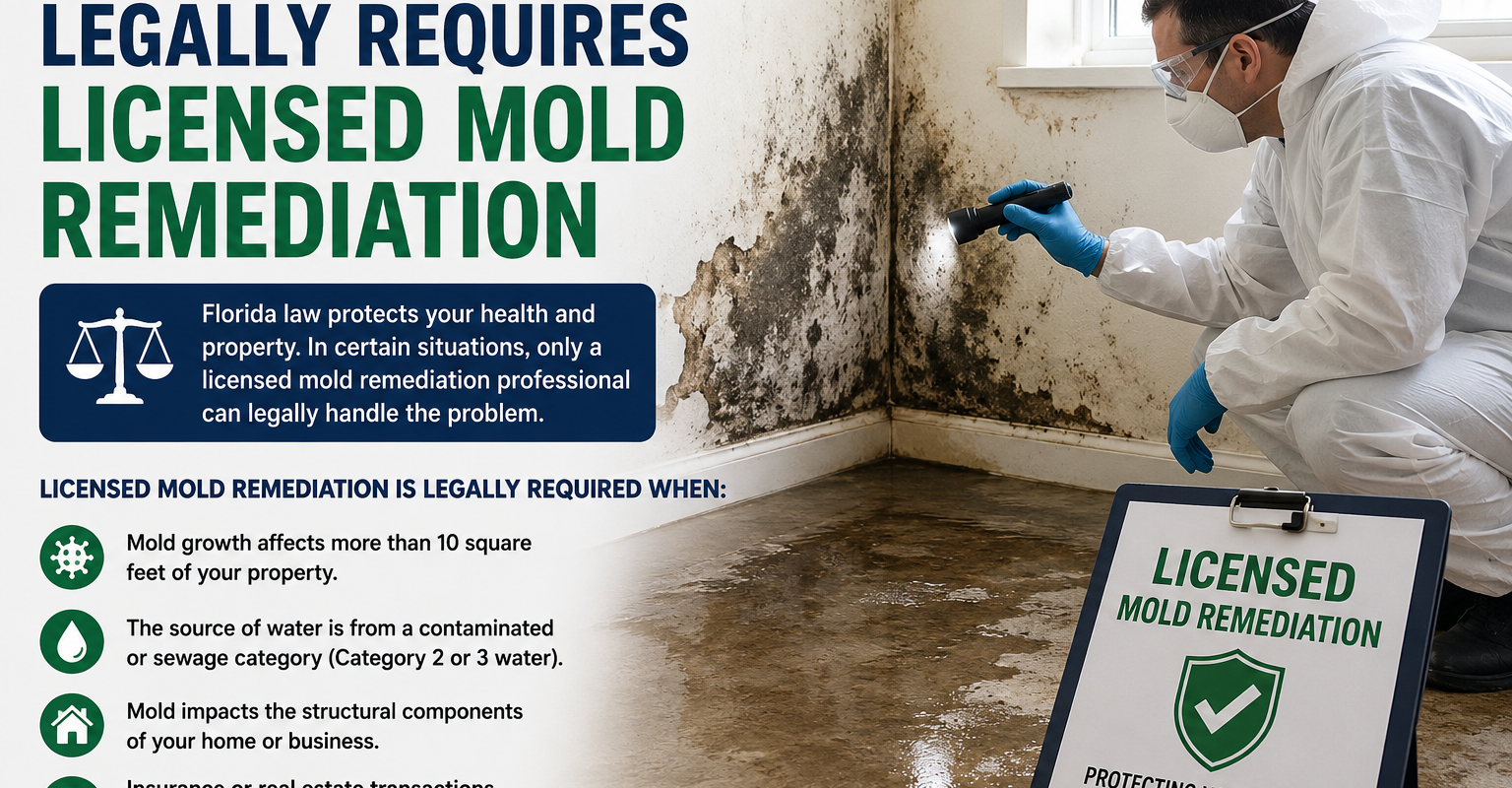
Water damage can quickly become a mold problem if it is not fixed right away. Florida has a warm and humid climate, which helps mold grow faster. Mold can start growing within 24 to 48 hours after water damage.
Many homeowners ask when mold remediation required Florida laws apply. The answer depends on the size of the mold problem and the type of damage. Small areas of mold may only need cleaning. Larger mold problems often require a licensed mold remediation contractor under Florida law.
Knowing the rules can help you protect your home, your health, and your insurance claim.
Why Water Damage Leads to Mold
Mold needs moisture to grow. When water stays inside a home, mold can spread quickly.
Wet materials that often grow mold include:
- Drywall
- Wood
- Carpet
- Insulation
- Ceiling tiles
- Cabinets
Even if the surface looks dry, moisture can stay hidden behind walls or under floors. That is why professional water damage restoration in Orlando is essential to thoroughly dry affected areas, prevent mold growth, and protect your home after water damage.
When Mold Remediation Required Florida
Many people want to know when mold remediation required Florida regulations become important.
In Florida, a licensed mold remediation contractor is generally required when mold covers 10 square feet or more. Large mold problems should not be cleaned without the right training and equipment.
Licensed professionals know how to remove mold safely without spreading spores to other parts of the home.
Why You Should Hire a Licensed Professional
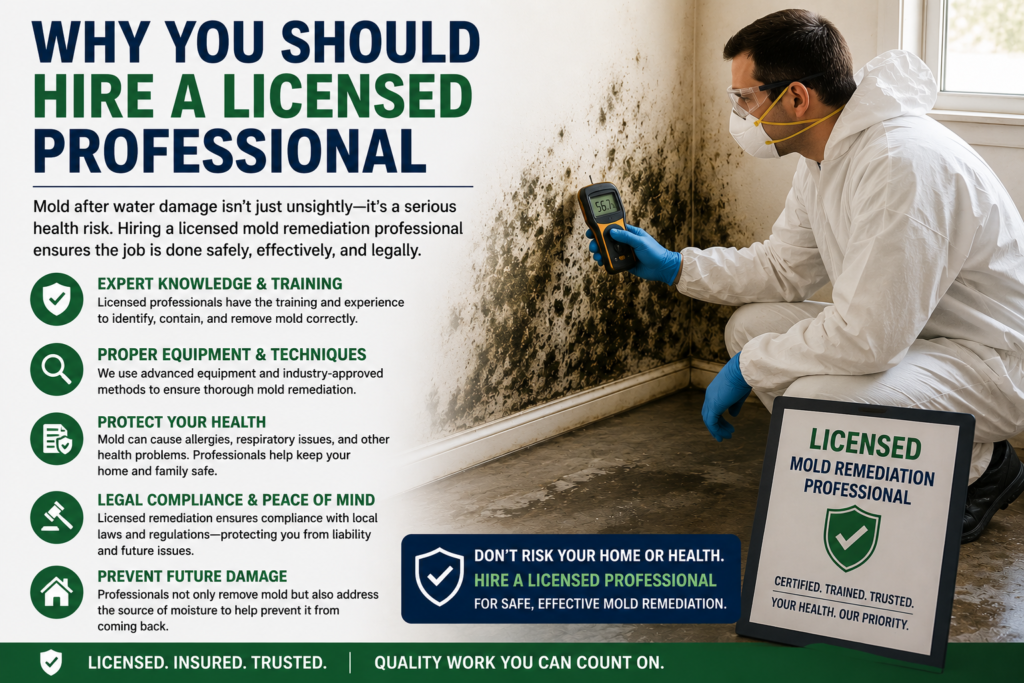
Removing mold is more than wiping off a surface. Mold spores can spread through the air during cleanup.
Licensed mold remediation companies use special equipment to:
-
Find hidden moisture
-
Contain the affected area
-
Remove damaged materials
-
Clean mold safely
-
Dry the property completely
-
Help prevent mold from returning
Professional cleanup protects both your home and your indoor air quality.
Signs You May Have Mold After Water Damage
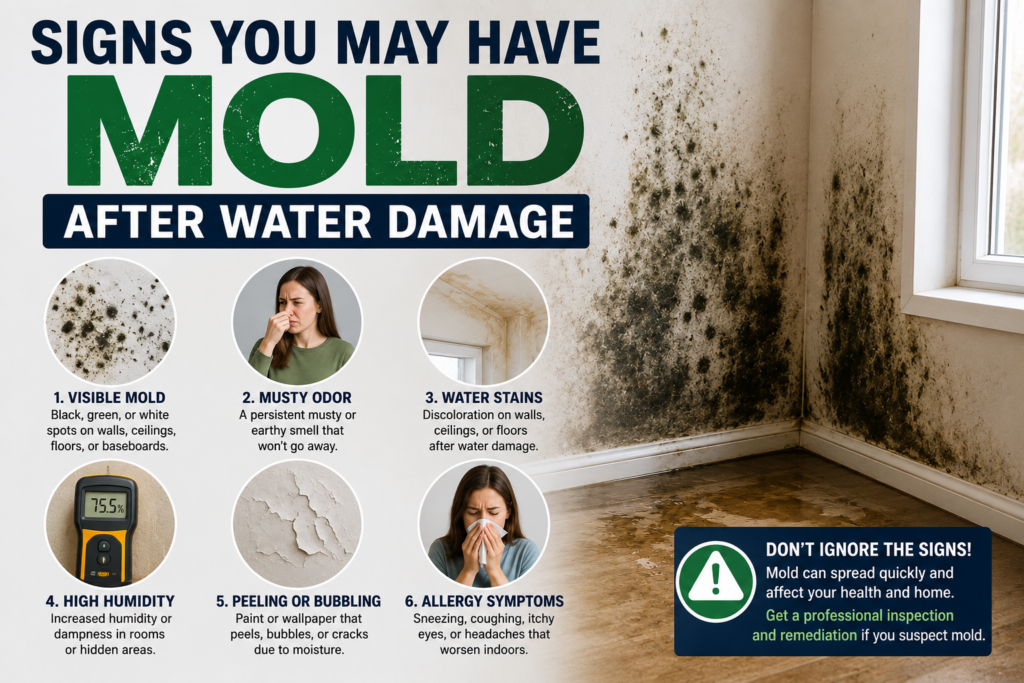
Water damage does not always leave visible mold right away. Watch for these warning signs:
-
Musty smells
-
Dark spots on walls or ceilings
-
Peeling paint
-
Warped flooring
-
Soft drywall
-
High indoor humidity
-
Mold that keeps coming back
If you notice these signs, schedule an inspection as soon as possible.
Health Risks of Mold
Mold can affect the air inside your home. Some people may develop health problems after exposure.
Common symptoms include:
-
Sneezing
-
Coughing
-
Runny nose
-
Itchy eyes
-
Skin irritation
-
Headaches
People with asthma, allergies, or weak immune systems may have stronger reactions.
Removing mold early helps reduce these risks.
Stop the Water Problem First
Mold will continue growing if moisture remains inside the home.
After water damage, take these steps:
-
Stop the leak.
-
Remove standing water.
-
Dry all wet materials.
-
Use fans and dehumidifiers.
-
Repair damaged plumbing or roofing.
Fixing the water source is the first step in preventing future mold growth.
Keep Records for Insurance
If water damage causes mold, keep good records for your insurance claim.
Take:
-
Photos of the damage
-
Videos of every affected room
-
Moisture inspection reports
-
Repair estimates
-
Receipts for cleanup and drying services
Good documentation helps support your claim and shows the extent of the damage.
How to Prevent Mold After Water Damage
The best way to avoid mold is to act quickly.
You can reduce the risk by:
-
Repairing leaks immediately.
-
Drying wet areas within 24 to 48 hours.
-
Keeping indoor humidity low.
-
Checking hidden areas for moisture.
-
Scheduling professional water damage restoration after flooding.
Quick action can save money and reduce future repairs.
Conclusion
Knowing when mold remediation is required in Florida helps homeowners take the right steps after water damage. Small mold problems may be cleaned safely, but larger areas often require a licensed mold remediation contractor.
If your home has water damage, do not wait. Dry the property quickly, fix the source of the moisture, and call a licensed professional if mold has spread. Fast action protects your home, improves indoor air quality, and helps prevent more costly repairs in the future.