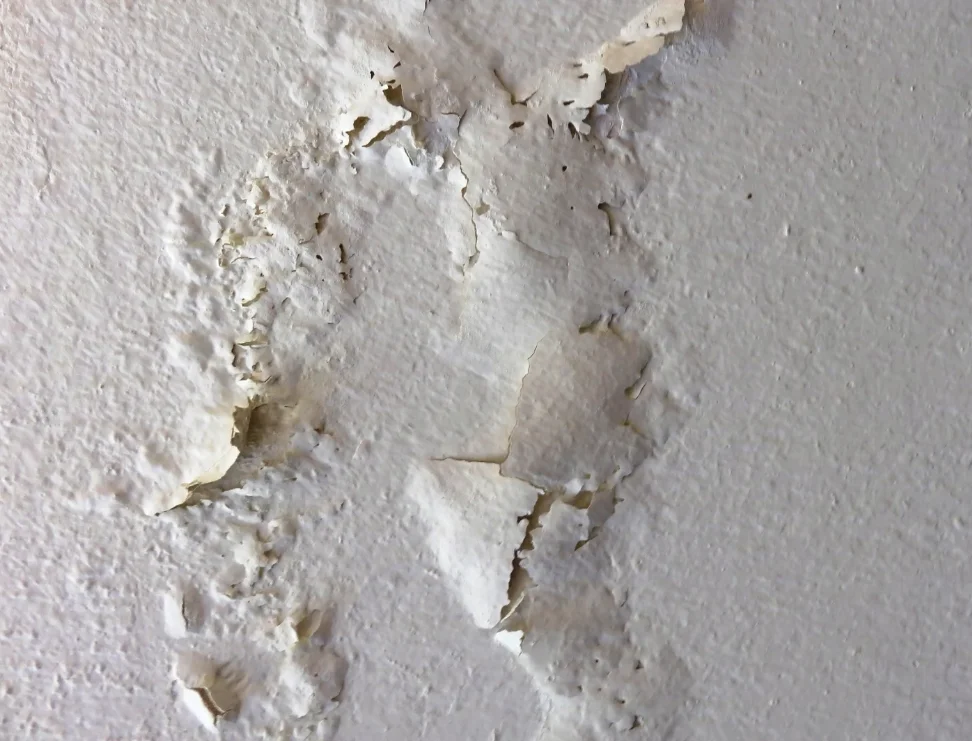
Crawl Space Water Damage Orlando FL
Standing water, wood rot, and mold under your home. Orlando's humidity makes crawl spaces one of the hardest spaces to dry properly — we do it right.
- IICRC S500 Certified
- FL Mold Remediator #MRSR3847
- Written Estimate Before Any Work
- 24/7 Emergency Response
Crawl space water damage Orlando properties face is a slow-developing problem that often doesn't announce itself until significant structural damage has already occurred. Unlike a flooded living room where you're standing in water, a wet crawl space sits out of sight — and by the time moisture odors reach the living space above, wood rot and mold have typically been developing for weeks or months.
DryGuard Restoration handles crawl space water damage from initial emergency extraction through final moisture clearance. Marcus D. Rivera, our lead technician and owner, holds IICRC WRT (Water Damage Restoration Technician) certification and operates under the IICRC S500 Standard for Professional Water Damage Restoration. We bring pin-type moisture meters, LGR dehumidifiers, and thermal imaging cameras to every crawl space job — because visual inspection alone doesn't tell the full story under a house.
Crawl space construction is less common in Central Florida than slab-on-grade — the dominant building method since the 1980s — but it's present throughout Orlando's older housing stock from the 1950s through early 1970s. If your home was built during that era, there's a reasonable chance you have a crawl space, and there's an equally reasonable chance it has never been properly assessed for moisture.
Signs of Water Damage in Your Orlando Crawl Space
Crawl space water damage rarely makes itself obvious from inside the house until it's already a significant problem. By the time homeowners notice something is wrong, the wood framing, subfloor decking, or HVAC ductwork below has often been wet long enough for mold colonization to begin — IICRC guidelines put that window at 24 to 48 hours in warm, humid conditions like Orlando's.
Watch for these indicators that something is wrong below your floor:
- Musty or earthy smell coming up through floor vents, around baseboards, or in the living areas over a crawl space — this is mold spore and microbial activity, not just "old house smell"
- Soft spots or flex in flooring — hardwood, tile, or laminate that gives underfoot often indicates saturated subfloor decking or joists below
- High indoor humidity year-round even when the AC is running properly — ground moisture from the crawl space cycles into the living area through gaps in the subfloor assembly
- Increased allergy or respiratory symptoms in occupants — mold spore counts in wet crawl spaces are measurably higher than in properly maintained ones, and those spores move upward through the HVAC system
- Wood rot visible on joists, sill plates, or beams — any grey or black discoloration on structural wood framing in the crawl space is a warning sign that moisture has been present long enough to support fungal growth
- Condensation on HVAC ductwork in the crawl space — this indicates the crawl space air is significantly more humid than the conditioned space above, often because a vapor barrier is absent, torn, or inadequate
- Standing water or very damp soil after rain events — if soil remains wet for more than 24–48 hours after rainfall, the drainage grade, vapor barrier, or both need attention
- Rust on metal fasteners in the crawl space — joist hangers, straps, and anchor bolts that show active corrosion indicate sustained high relative humidity below the floor
If you're seeing more than one of these signs, it's worth a professional inspection with moisture meters and infrared imaging rather than a quick look with a flashlight. Pin-type meters inserted into the joist wood give actual wood moisture content numbers — structural lumber is at risk above 19% MC, and replacement-level rot develops in wood that stays above 28% for extended periods.
Why Crawl Spaces Hold Moisture Longer in Florida's Climate
Orlando averages 74 to 77% relative humidity — and that's the annual average. During summer months from June through September, RH regularly exceeds 85% during morning hours. Crawl spaces, by design, are partially or fully open to the exterior through foundation vents. That means the air in your crawl space is never drier than the outside air — and in Florida, outside air is rarely dry.
When warm, humid outdoor air enters a crawl space through foundation vents, it hits the cooler underside of the air-conditioned subfloor and loses its capacity to hold moisture. That moisture transfers into the wood framing, insulation, and soil. Over time, the soil in an unconditioned or poorly ventilated crawl space reaches near-saturation equilibrium with the outside environment. This isn't a flood — it's a slow, steady process that creates the conditions for mold growth and wood deterioration without any visible water event.
Ground evaporation compounds the problem. Florida soil retains moisture from rainfall and from the shallow water table in many parts of Orange County. Without a vapor barrier — a 6-mil or heavier polyethylene sheet covering the crawl space floor — that moisture evaporates upward directly into the wood structural members above. The soil can act as a continuous moisture source even during dry spells, because the water table in parts of Orlando sits just a few feet below ground surface.
HVAC ductwork installed in crawl spaces is an additional vulnerability. Supply ducts carry conditioned (cold, dry) air. The outside of those ducts is surrounded by warm, humid crawl space air. The temperature differential causes condensation to form on the duct exterior — adding liquid water to a space that was already accumulating moisture from ground evaporation. Condensation on ductwork can drip onto joists and subfloor, keeping wood moisture content chronically elevated even without any plumbing failure or flood event.
This combination — high ambient RH, ground evaporation, inadequate vapor barriers, and duct condensation — makes Orlando crawl spaces among the most challenging in the country for moisture management. A drying job done without understanding these ongoing sources will not stay dry.
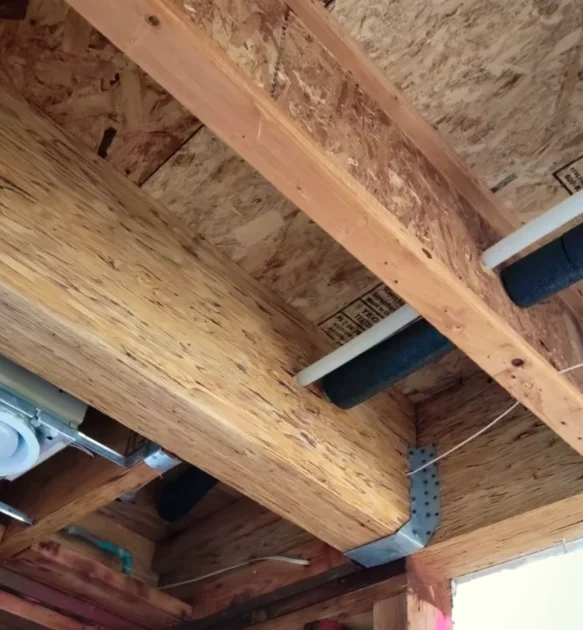
LGR dehumidifiers placed in negative pressure configuration pull moisture from saturated joists and subfloor decking. Wood moisture content is monitored daily until structural lumber reads below 19%.
What DryGuard Does to Dry and Remediate a Wet Crawl Space
Crawl space water damage restoration requires a more deliberate approach than drying a finished room. Confined access, limited airflow, saturated soil, and compromised vapor barriers all complicate the process. Here's how we work through it.
Assessment and Moisture Mapping
We begin every crawl space job with a full inspection — not just a look at the access hatch. A technician enters the crawl space with pin-type and pinless moisture meters to measure wood moisture content in the joists, rim joists, sill plates, and subfloor decking throughout the accessible area. We photograph every section. Structural lumber above 19% MC is flagged; anything approaching 28% MC or higher indicates active rot risk and affects the drying timeline and protocol.
Thermal imaging helps identify areas where moisture has wicked laterally through wood members beyond the visible wet zone. It also identifies ductwork condensation points and locations where ground moisture is actively evaporating into the space — both of which inform drying equipment placement.
Water Extraction and Debris Removal
If standing water is present, we extract it before drying equipment goes in. Crawl spaces often have irregular terrain — soil mounded around piers, low points near foundation walls — so extraction requires physical presence in the space, not just pumping from the access hatch. Any water-damaged insulation, deteriorated vapor barrier, or debris that holds moisture is removed before drying begins. Leaving soaked insulation against joists while running dehumidifiers just moves moisture around rather than eliminating it.
Negative Pressure Drying
For enclosed or semi-enclosed crawl spaces, we use negative pressure drying — positioning equipment to create slightly lower air pressure inside the crawl than outside, so dry air is drawn inward through controlled openings and humid air is exhausted outward through dedicated exhaust points. This prevents humid crawl space air from pushing up into the living space above during the drying process.
LGR dehumidifiers (Low Grain Refrigerant units) are positioned to pull moisture directly from the air in the crawl space and from the surface of wet materials. High-velocity air movers are aimed along joist runs to promote evaporation from wood surfaces. Equipment placement is based on the moisture map — not randomly distributed.
Daily Moisture Monitoring
We return each day to record psychrometric data — temperature, relative humidity, dew point — and re-measure wood moisture content at multiple points. These readings show whether drying is progressing at the expected rate and whether equipment repositioning is needed. The job does not close until structural lumber reaches below 19% MC consistently across the affected area. We provide written documentation of final readings for your records and any insurance claim.
Mold Assessment and Remediation
If mold is present on structural wood — and in many wet crawl space situations it is, because the moisture has been building for some time before the homeowner calls — we address it under Florida Statute §468.8411 governing mold remediators. Our license number is #MRSR3847. Mold remediation in a crawl space involves HEPA vacuuming of mold colonies, application of an EPA-registered antimicrobial, encapsulation of treated surfaces, and confirmation testing through air sample analysis of mold spore counts. This is separate from the structural drying work but often happens concurrently when conditions warrant.
Vapor Barrier Assessment and Installation
After the crawl space reaches acceptable moisture readings, we assess the vapor barrier condition. An absent, torn, or undersized vapor barrier (thinner than 6-mil polyethylene sheeting) is the most common reason a crawl space has a recurring moisture problem. We provide a written recommendation — vapor barrier repair, full replacement with 6-mil or 20-mil reinforced poly, or full encapsulation depending on the property's exposure. If the property has a high water table or chronic ground saturation, we may also recommend a perimeter drainage solution.
Xactimate Documentation Throughout
Every crawl space job is documented with Xactimate from the first hour through final clearance. Photographs, moisture readings, drying logs, and equipment records are compiled into a complete job file. This documentation supports your insurance claim — whether under a standard HO-3 policy for a covered event like a supply line failure, or under an NFIP flood policy for external water intrusion.
Related services: hardwood floor water damage, mold after water damage.
Crawl Space Water Damage Orlando — Frequently Asked Questions
How do you dry a flooded crawl space in Orlando?
After extracting standing water, we establish a negative pressure drying setup using LGR dehumidifiers and high-velocity air movers positioned to maximize airflow across saturated wood surfaces and soil. In enclosed crawl spaces this negative pressure approach draws dry air inward through controlled openings and exhausts humid air outward, preventing the wet crawl space air from migrating up into the living space while drying progresses. We monitor wood moisture content with pin-type moisture meters daily — structural lumber must reach below 19% MC before we clear the job. Orlando's 74–77% average RH means ambient conditions never assist with drying; all moisture removal has to come from the drying equipment. Expect 3 to 10 days depending on the depth of saturation and the area involved.
Does homeowners insurance cover crawl space water damage in Florida?
A standard HO-3 policy covers sudden and accidental losses — a supply line burst, a water heater failure, an appliance malfunction. It excludes external flooding, long-term seepage, and gradual damage from deferred maintenance. Many crawl space water damage situations fall into a grey area: a plumbing leak that went undetected for weeks, or moisture intrusion that started with a storm event but continued through ongoing humidity. DryGuard documents the source, classification, and timeline of the water damage from the first hour on site using Xactimate software, which gives your adjuster the clearest possible picture of what happened. Florida Statute §627.70131 requires your insurer to respond to your claim within 14 days and resolve it within 90 days. Flood-sourced events require NFIP or private flood coverage — a separate policy from your homeowners policy.
How long does crawl space drying take in Orlando?
Realistically, 3 to 10 days — with the range driven by the extent of saturation, how long moisture has been present, and the condition of the existing vapor barrier. A crawl space that flooded recently from a supply line failure and was caught quickly dries faster than one where high humidity has been wicking into joists for an unknown period. Orlando's climate — 74 to 77% average RH — means the equipment has to work against the ambient air rather than with it. We measure progress daily and provide a realistic timeline estimate after the initial assessment. We don't close a job on a schedule; we close it when the numbers say it's done. Wood moisture content below 19% across all structural members, confirmed with pin meter readings at multiple points, is the clearance standard we use.
Do I need crawl space encapsulation after water damage is remediated?
It depends on what the vapor barrier assessment finds. If your crawl space has no vapor barrier — common in homes built before the 1970s — or the existing barrier is torn, incomplete, or thinner than 6-mil poly, replacing or installing one is strongly recommended after drying. Without a vapor barrier, the dried crawl space will begin accumulating ground moisture again within days of equipment removal, because Florida soil and the shallow water table below many Orange County properties are a continuous moisture source. Full encapsulation — sealing walls and floor with 20-mil reinforced poly and conditioning the space — offers the highest moisture control level and is appropriate for properties with chronic moisture problems or high water table exposure. A repair or replacement of a standard 6-mil vapor barrier is sufficient for many properties. We give you a written assessment and recommendation after every crawl space job, based on the actual conditions we found — not a standard upsell.
Wet crawl space? The longer it stays wet, the worse it gets.
IICRC-certified. Written estimate before any work begins. 24/7 emergency dispatch throughout Orlando and Orange County.
(407) 250-7641