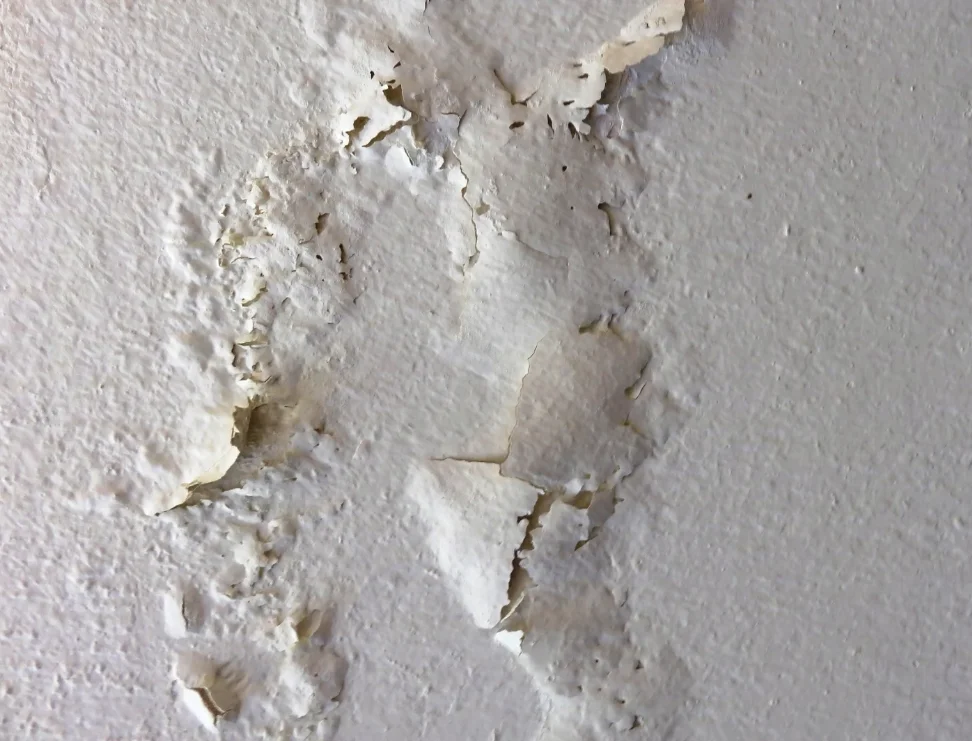
Water damage restoration Lake Nona Orlando
Lake Nona's newer homes look bulletproof — but PEX fitting failures, stucco intrusion, and tight building envelopes create a different set of water damage risks than older neighborhoods. DryGuard Restoration reaches 32827 in 18 to 22 minutes and brings IICRC S500-standard drying to your Medical City or Tavistock community home.
Water damage in new construction — why Lake Nona 32827 is not immune
Lake Nona is one of the most deliberately planned communities in Central Florida. The Tavistock Group's master plan, Medical City's institutional infrastructure, and the neighborhood's proximity to the SunRail corridor all point to a well-managed environment. That reputation can create a blind spot: water damage in newer construction fails quietly, in ways that don't announce themselves the way a 1960s pipe burst does. By the time the ceiling stains or the floor bubbles, the damage behind it is already significant.
PEX and CPVC fitting failures
The majority of Lake Nona's 2005–2020 homes use PEX-A or PEX-B supply lines with brass or plastic crimp fittings. These outperform copper in freeze resistance, but a single under-crimped fitting — or a fitting installed in a joist bay with insufficient support — can vibrate loose over years of thermal cycling. In a tight wood-frame home, that fitting sits behind drywall and insulation. The first visible sign is often a watermarked ceiling on the floor below, by which time the subfloor sheathing may already show Category 2 contamination.
Stucco exterior water intrusion
Lake Nona's stucco-clad homes are especially vulnerable at window and door flanges, where inadequate flashing or expansion gap sealing allows wind-driven rain to penetrate the wall assembly. This is a slow, chronic intrusion rather than a dramatic flood event — but the moisture it delivers directly to wall framing and insulation creates persistent elevated RH inside the cavity. Thermal imaging with infrared detection is often the only reliable way to locate these intrusion points before they cause structural damage.
Stormwater management near Lake Hart
The Lake Nona master plan incorporates a complex stormwater retention system built around Lake Hart and Lake Nona itself. Most of this infrastructure performs well in typical rain events. During extreme weather — tropical storm bands or multi-day heavy rain events — retention ponds near the lower sections of the community can approach or exceed capacity, putting adjacent properties at elevated flood risk. Properties within FEMA-designated flood zones near these water bodies may require NFIP flood insurance rather than relying on a standard HO-3 policy.
High-value interior finishes raise claims complexity
Lake Nona homes often include engineered hardwood, high-end tile, and custom cabinetry that carry higher replacement costs than standard builder-grade materials. An HO-3 policy's actual cash value calculation can significantly undervalue these finishes without proper Xactimate documentation that itemizes exact materials and quantities. We produce line-item estimates from the first day, ensuring the insurance adjuster's scope reflects what was actually damaged — not a generic contractor estimate that uses lesser materials.
How DryGuard handles water damage in a Lake Nona 32827 home
Lake Nona's 32827 ZIP sits in southeastern Orange County, south of the Orlando International Airport corridor and east of FL-417 (GreeneWay). The community spans several distinct sub-neighborhoods — from the earliest Tavistock residential sections near the Medical City cluster to newer Laureate Park blocks and the Nona Cove area near Lake Hart. Each section has its own construction vintage and risk profile, which is why a site-specific moisture assessment always comes before any drying plan.
When our IICRC WRT technician arrives in Lake Nona, the inspection covers not just the visibly wet area but the full structural envelope. In a wood-frame home, water travels along framing members and through insulation before it shows on a surface. We use both pin-type moisture meters for surface readings and pinless meters that penetrate several inches into materials without damaging them. Infrared thermal imaging reveals temperature differential at moisture fronts — a saturated area behind a wall reads slightly cooler than dry material, making the outline of the damage visible even through finished surfaces.
Once we have a complete moisture map, we extract standing water with truck-mounted equipment and place LGR dehumidifiers and air movers per the IICRC S500 psychrometric drying calculations for the room's volume, ambient temperature, and starting RH. In a typical Lake Nona wood-frame home, target RH drops below 50% within 48 hours. We return daily to log readings and adjust equipment placement until materials return to acceptable moisture content.
For Medical City healthcare workers and Tavistock community residents who are away from home during events, we can coordinate access through HOA management or property managers and keep you updated with documentation photos and psychrometric logs. All scope is produced in Xactimate format for your insurance carrier.
Lake Nona water damage — frequently asked questions
Does new construction in Lake Nona still get water damage?
Yes — and the failure modes are different from older homes, which is why homeowners are sometimes caught off guard. Lake Nona's 2005–2020 construction uses PEX supply lines with crimp or clamp fittings. These are generally reliable, but an under-crimped connection behind drywall — or a CPVC joint that was glued in high heat and contracted over time — can leak slowly for months before the damage is visible on the surface.
Stucco exteriors are another common entry point. Without properly lapped window flashing and sealed expansion joints, wind-driven rain works its way into the wall cavity at window frames and penetrates toward framing and insulation. By the time interior paint bubbles or a wall feels soft, the framing behind it may already show elevated moisture content beyond the IICRC S500 acceptable range. The IICRC WRT water classification framework — Category 1 through 3 — applies regardless of how new the construction is.
How fast can DryGuard reach Lake Nona from your Orlando base?
Our shop at 4121 34th St is approximately 18 to 22 miles from the 32827 ZIP code. Typical routes are FL-528 (BeachLine Expressway) east to Narcoossee Rd, or US-441 South to Boggy Creek Rd. Under normal conditions that puts us at your door in 18 to 22 minutes. Late-night or early-morning calls — when the Medical City traffic pattern is light — often fall on the shorter end of that range.
We staff our emergency line 24 hours a day, 365 days a year. A tropical storm band hitting Lake Nona at 3 AM gets the same response team as a weekday afternoon appliance flood. We bring truck-mounted extraction and commercial drying equipment on the initial call — not a wet-vac and a few box fans.
Does my Lake Nona HOA affect how water damage is handled?
It can, and it is worth clarifying before a water event rather than during one. Tavistock-managed communities and other Lake Nona HOAs sometimes have rules about staging equipment in driveways or common areas, contractor parking, and exterior access points. We have worked in HOA-governed communities throughout Orange County and can coordinate with property managers to stage our equipment appropriately without generating violations.
The more important HOA question is insurance: many Lake Nona communities use a master condo or townhome policy that covers structural elements from the studs out, while your individual HO-6 or HO-3 policy covers interior finishes and personal property. When a pipe fails inside a townhome wall, the split between the two policies matters a great deal. Our Xactimate documentation separates structural scope from finish scope so each carrier can process the correct portion of the claim.
Can mold grow in a newer Lake Nona home?
Mold does not care about the age of a home — it cares about moisture and an organic food source, both of which are present in any wood-frame construction. In newer Lake Nona homes, the risk actually has a specific wrinkle: spray foam insulation, which is common in post-2010 construction for energy efficiency, can trap moisture against framing if a leak occurs before the foam reaches full cure, or if it is improperly applied around a penetration. Once moisture is sealed inside a foam cavity, standard drying equipment cannot reach it without removing the foam.
Orlando's ambient relative humidity averages 74–77%, which means that even after we extract standing water, the air in a closed room keeps surfaces marginally damp unless RH is actively driven below 50%. Our LGR dehumidifiers are designed for exactly this condition — they operate efficiently even when input air is already very humid, unlike standard units that lose capacity as ambient RH rises. Mold growth can begin in 24 to 48 hours from the moment of moisture intrusion. Marcus D. Rivera holds FL Mold Remediator License #MRSR3847 under Florida Statute §468.8411 and can assess for active mold growth on the same visit as extraction.
Related pages you may find helpful
- Emergency Water Damage Orlando — 24/7 Response
- Mold Remediation Orlando — FL Lic #MRSR3847
- Water Damage Restoration Cost Guide Orlando 2026
- Does Homeowners Insurance Cover Water Damage in Florida?
- Structural Drying Services Orlando — LGR & Desiccant Drying
- Flood Damage Restoration Orlando
- Water Damage Restoration Hunters Creek Orlando
Neighboring areas we also serve
Water damage in Lake Nona? New homes need the same fast response.
A PEX fitting behind your drywall or storm intrusion through a stucco window flange can silently damage framing for months. Once we are on-site, extraction and drying begin immediately — and every psychrometric data point goes into a documented log your insurance carrier can verify. Written estimate before any work. No surprises.
IICRC S500 Certified · FL Mold Remediator Lic #MRSR3847 · 24/7 · Xactimate Documentation