Water Damage Restoration Conway Pines Orlando FL
Serving ZIP 32812 — Southeast Orlando near OIA
Conway Pines sits east of S Orange Avenue in one of Orlando's most established HOA subdivision corridors — homes built between the mid-1980s and early 2000s that are now entering the failure window for HVAC systems and early CPVC plumbing. Add the stormwater retention ponds threaded through virtually every subdivision and the flight-path rainfall patterns from nearby Orlando International Airport, and water damage restoration Conway Pines Orlando jobs require documentation precision that accounts for both structural drying and HOA liability questions.
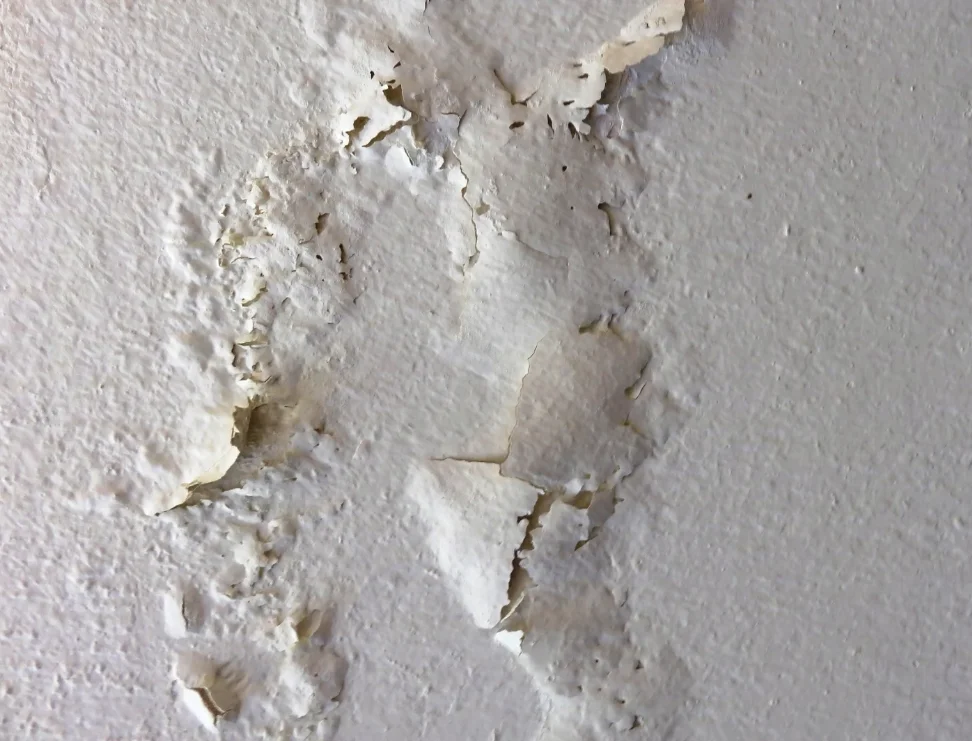
Conway Pines Water Damage Risks: HVAC, Plumbing, and Retention Ponds
Unlike Orlando's older districts, Conway Pines homes look solid from the outside. That surface condition is part of the problem — hidden moisture from aging mechanical systems can accumulate for weeks without visible signs.
Aging HVAC Systems
- Original HVAC units from 1990s builds are 25–30 years old — well past typical 15–20 year service life
- Clogged condensate drain lines overflow air handler closets silently; a single weekend away can mean 48–72 hours of undetected saturation
- Secondary drain pans corrode through — water migrates into ceiling drywall and wall cavities before any visible staining appears
- Refrigerant coil freeze-thaw cycles accelerate pan corrosion in Florida's high-humidity environment
Plumbing — The Critical Failure Window
- Polybutylene (PB) supply lines, used widely in Florida construction through the mid-1990s, become brittle and crack — often at fittings under slab
- Early CPVC formulations from 1985–1995 builds show stress fractures at 25–30 years under Florida's mineral-heavy water conditions
- Slab-level failures release water directly under flooring; thermal imaging is the only reliable way to find the extent before tile removal
Stormwater and External Flooding
- Subdivision retention ponds overflow during storm events exceeding their design capacity — rear-lot homes are most exposed
- Proximity to the Beachline corridor creates localized drainage patterns that push surface runoff toward lower-elevation subdivisions
- Airport-area rainfall can be more intense than recorded at standard weather stations — always verify actual gauge data when filing a storm claim
- Standard HO-3 policies exclude surface flooding; NFIP coverage through FEMA flood maps fills this gap for eligible properties
When damage may trace to shared infrastructure, we document the water origin point, migration path, and affected materials in Xactimate format — the same standard used by insurance adjusters. This matters when you need to establish that the source was a common element under the HOA's responsibility.
Infrared thermal imaging finds moisture under tile and in wall cavities without demolition. In 1990s Conway Pines homes with slab-level plumbing failures, this saves significant tile and flooring that would otherwise be removed speculatively.
Low Grain Refrigerant dehumidifiers are essential for drying concrete subfloors after slab-level events. Concrete holds significant moisture volume, and standard dehumidifiers cannot pull it at the vapor pressures required. We run psychrometric monitoring daily until readings confirm the slab has returned to acceptable moisture content.
Stormwater pond overflow is classified as Category 2 or 3 under IICRC S500, depending on what the retention system has collected. This is not simple clean-water drying — it requires antimicrobial treatment of affected materials and may require removal of flooring that cannot be adequately decontaminated.
Florida law requires your insurer to respond to your claim within 14 days. Our Xactimate documentation gives your adjuster everything they need to process the claim efficiently — itemized scope, moisture readings, photo documentation, and classification under IICRC S500.
The Conway Pines Difference: Subdivision Complexity and HOA Boundaries
Two factors set Conway Pines water damage jobs apart from simple residential calls: the intersection of HOA governance with insurance liability, and a building era that concentrated mechanical risk into a narrow range of now-aging components.
25-Year Mechanical Failures: What to Expect in 32812
Marcus D. Rivera, our IICRC WRT lead technician, sees a consistent pattern in Conway Pines calls: an HVAC condensate overflow or a slow supply line fracture that has been leaking for days or weeks inside a wall before the homeowner notices soft flooring or a musty smell. At Orlando's average relative humidity of 74–77%, a Category 1 (clean water) event that goes undetected for 48 hours becomes a Category 2 situation — mold has begun establishing and porous materials like drywall and insulation must be assessed for removal.
The DryGuard protocol for 1990s–2000s Conway Pines homes starts with a full thermal imaging sweep of the affected and adjacent rooms before we move any equipment. We map moisture spread with both pin and pinless meters, set baseline psychrometric readings, and begin water extraction immediately. Air movers and LGR dehumidifiers run on a monitored drying schedule with daily readings — not a set-it-and-leave approach that under-dries concrete slabs.
HOA Boundaries and Who Pays for What
Conway Pines subdivisions vary in their CC&R structures, but most follow a standard Florida HOA framework: the association owns common elements and is responsible for their maintenance; unit owners own from the interior walls inward and are responsible for their dedicated systems. Water damage disputes arise most often when the origin is ambiguous — a shared irrigation line, a drain that serves multiple units, or a retention pond that backs up against a rear-lot home.
Our Xactimate documentation names the water source, categorizes it under IICRC S500, maps the migration path with moisture meter readings and thermal images, and identifies which materials were affected. That evidence package gives you what you need for both your personal HO-3 insurer and any dispute with the HOA's master policy carrier. Under Florida Statute §627.70131, both insurers have a 14-day response obligation once you file.
If a mold assessment is needed after the drying phase — common when a slow HVAC leak went undetected — our FL Mold Remediator License #MRSR3847 covers us under Florida Statute §468.8411 to provide the full mold remediation protocol and post-remediation verification report required by Florida law.
Conway Pines Water Damage — Common Questions
Answers specific to 32812, HOA subdivisions, 1990s construction, and the stormwater retention issues in Southeast Orlando.
Who is responsible for water damage in an HOA community — the homeowner or the HOA?
The boundary depends on your community's CC&Rs, but the general rule is: damage from common areas or shared infrastructure is the HOA's responsibility; damage from inside your unit or your dedicated supply lines is yours. In Conway Pines subdivisions the HOA typically maintains stormwater retention pond management and shared drainage, so if flooding traces to a pond overflow or failed retention infrastructure, you have a legitimate claim against the HOA's master policy. We document the origin point of every event in Xactimate format — that documentation is often the deciding factor in HOA disputes.
How quickly can DryGuard reach Conway Pines in an emergency?
Conway Pines is approximately 12 minutes from our base via S Orange Avenue and the Beachline corridor. We run 24/7/365 and dispatch immediately on any call. Night-window response is consistently fast given the limited traffic between our base and the 32812 area after hours. At Orlando's 74–77% average relative humidity, mold can begin establishing within 24–48 hours — early arrival is the single most important factor in limiting secondary damage.
What are the main water damage risks in 1990s–2000s Conway Pines homes?
Two failure windows dominate. First, HVAC systems installed with original construction are 20–30 years old — condensate drain lines clog and overflow air handler closets quietly for weeks; secondary drain pans corrode through and release water into ceiling assemblies. Second, polybutylene and early CPVC supply lines become brittle at this age, especially at fittings and elbows under the slab. Slab-level pipe failures release clean water that migrates invisibly under flooring. Thermal imaging is the only reliable tool to find the moisture extent without demolition.
Can stormwater retention ponds in Conway Pines subdivisions flood homes?
Yes. The retention ponds throughout Conway Pines handle normal runoff, but significant storm events — especially during hurricane season — can push them past capacity. Rear-lot homes with grades sloping toward the pond face the highest risk. Stormwater intrusion is classified as Category 2 or 3 under IICRC S500, requiring full extraction and antimicrobial treatment. Check whether your home sits in a FEMA flood zone — NFIP coverage addresses surface flooding that standard HO-3 policies exclude.
More Resources from DryGuard Restoration
Also Serving These Areas Near Conway Pines
DryGuard covers all Southeast and Central Orlando — same fast 24/7 response to every zip code.
Water in Your Conway Pines Home? Call Now.
We reach Conway Pines in about 12 minutes and start extraction immediately. HOA documentation included. Written estimate before any work begins.