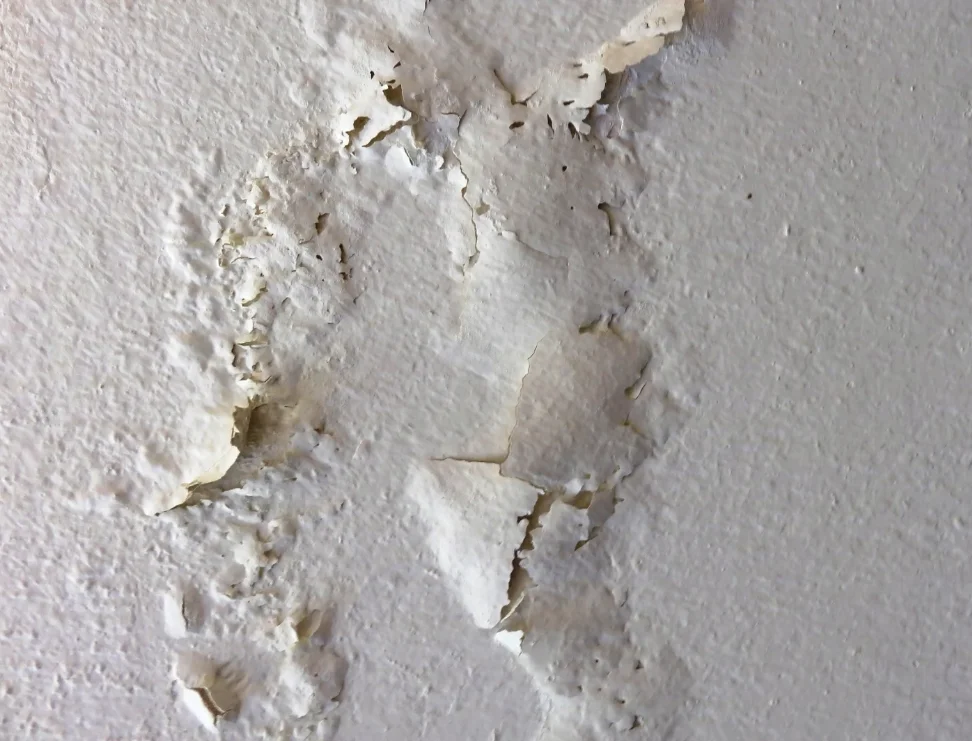
Water Damage Restoration Edgewood Orlando FL
32809 — We're 8 minutes away. Edgewood's 1960s CBS homes and Shingle Creek flooding require certified, thorough restoration — not a quick dry.
- IICRC S500 Certified
- FL Mold Remediator #MRSR3847
- Written Estimate Before Any Work
- 24/7 Emergency Response
Water damage restoration Edgewood Orlando requires knowing this city for what it actually is — not a neighborhood, but a separate incorporated municipality in its own right. Edgewood sits completely surrounded by the City of Orlando at 32809, but it has its own government, its own character, and its own set of drainage challenges tied to the Shingle Creek headwaters that run through Orange County's south side.
DryGuard Restoration is approximately eight minutes from Edgewood via S Orange Ave. We dispatch 24 hours a day and carry truck-mounted extraction equipment, LGR dehumidifiers, psychrometric monitoring instruments, and thermal imaging cameras to every job. Marcus D. Rivera, our lead technician and owner, holds IICRC WRT (Water Damage Restoration Technician) certification and operates under the IICRC S500 Standard for Professional Water Damage Restoration.
We document all water damage restoration Edgewood Orlando jobs with Xactimate software from start to finish, giving you properly formatted documentation for any insurance claim — whether HO-3 homeowners policy, a separate flood policy through the National Flood Insurance Program, or a landlord policy.
Edgewood as a City — What That Means for Your Restoration Claim
Most residents and even many insurance adjusters treat Edgewood as a neighborhood of Orlando. It isn't. The City of Edgewood is an incorporated municipality governed by its own city commission. At roughly 2,600 residents in about 1.5 square miles, it's one of the smallest cities in Orange County. This distinction matters in a few practical ways.
Building permits in Edgewood are issued by the City of Edgewood, not the City of Orlando. Reconstruction work after water damage — replacing drywall, flooring, cabinetry — must be permitted through Edgewood's building department. DryGuard's mitigation work (extraction and drying) typically doesn't require a permit, but reconstruction does. If your insurer's adjuster or a less thorough contractor treats Edgewood like Orlando for permitting purposes, you may face delays or compliance issues down the line. We flag this upfront so you're not surprised later.
Shingle Creek, Flooding, and Edgewood's Low-Lying Streets
Edgewood is bounded roughly by Hoffner Ave to the south and the S Orange Ave commercial corridor to the east. The terrain is flat and low, and several streets in the interior of the city sit within or adjacent to Shingle Creek's headwater drainage zone. Shingle Creek is part of the Lake Toho watershed that eventually drains toward the Everglades — but in Central Florida, it's best known for backing up during heavy summer rainfall and tropical weather events.
When Shingle Creek backs up, several Edgewood residential streets experience flooding from the street up rather than from a pipe or roof failure. This is technically external flooding — a category that standard HO-3 policies exclude. If your Edgewood property is in FEMA Zone AE, your mortgage lender required flood insurance through the NFIP. If you're in Zone X and waived flood coverage, this is worth revisiting with your insurance agent before the next storm season.
Beyond flooding, Orlando's average relative humidity of 74–77% creates year-round moisture pressure on any structure with even minor envelope failures — cracked stucco, missing weep screed, deteriorated window caulking. Low-lying properties near Shingle Creek feel this more acutely, particularly after ground saturation events where the water table rises close to slab level.
Edgewood's 1960s–1970s Housing Stock: What Goes Wrong
The dominant construction type in Edgewood is concrete block and stucco from the 1960s through mid-1970s. CBS construction is often praised for its durability — and the shells of these homes do hold up well — but the interior systems of a sixty-year-old house tell a different story.
Galvanized steel water supply lines, common in homes built before the 1980s copper era, corrode from the inside. The rust narrows the pipe interior over decades, then one day the weakened wall fails entirely. A burst galvanized line behind a kitchen wall or in a utility closet can run for hours in an unoccupied house before anyone notices the water seeping under the baseboard. By then, Category 1 clean water has absorbed into the drywall paper, flooring underlayment, and wall cavity insulation — and the 24–48 hour mold clock has started.
Cast-iron drain lines in these homes accumulate scale buildup and root intrusion after decades of use. Sewage backup through a floor drain or toilet becomes a Category 3 water damage event — contaminated black water that requires full personal protective equipment, specialized antimicrobial treatment, and disposal of porous materials that cannot be effectively sanitized. This is not a job for a wet/dry shop vac and a fan.
Thermal imaging is essential in Edgewood's older CBS homes. Concrete block walls conduct moisture laterally within the block core. A leak at one point can travel six or eight feet horizontally before manifesting as a stain or soft spot visible from the interior. Pin-type and pinless moisture meters, combined with infrared thermal imaging, let us map the full extent of saturation before drying begins — not after the equipment has been running for three days and a different wall turns soft.
What to Expect When DryGuard Responds to Edgewood
Every job starts with a safety walk and water classification. We identify whether the water source is Category 1 (clean supply line or rain intrusion), Category 2 (dishwasher overflow, washing machine, aquarium), or Category 3 (sewage, groundwater flooding) per IICRC S500 classifications. The category determines the protocol — Category 3 events require full contamination procedures and removal of all porous materials that contacted the water.
After extraction, we take psychrometric baseline readings — temperature, relative humidity, and dew point — in every affected room. These numbers guide our LGR dehumidifier and air mover placement. Setting up equipment randomly and leaving doesn't work in Florida's climate; drying systems have to overcome ambient humidity that never drops below 65% even on dry days.
We return daily to log moisture readings, adjust equipment placement, and photograph progress. Xactimate documentation runs throughout the job. When structural materials — drywall, wood framing, subfloor — reach acceptable moisture thresholds, we provide written clearance documentation. You get that document. Your insurance adjuster gets that document. It protects everyone.
Florida Statute §627.70131 requires your insurer to acknowledge a claim within 14 days and issue payment or a denial within 90 days. Starting documentation immediately — not after you've dried things out yourself — is the best protection of your claim rights.
Edgewood Orlando Water Damage — Frequently Asked Questions
Is Edgewood covered by DryGuard Restoration's Orlando service area?
Yes, completely. Edgewood is its own incorporated city, not part of the City of Orlando, but it falls squarely within our Orange County service area and is one of our closest response zones. Our base on 34th St in Orlando is 8 to 10 minutes from most Edgewood addresses. We've worked throughout the residential streets between Hoffner Ave and the S Orange Ave corridor. There is no trip fee, mileage charge, or "outside service area" premium for Edgewood calls.
How fast can DryGuard reach Edgewood, FL?
Eight to ten minutes under normal traffic conditions via S Orange Ave southbound. Edgewood is close enough that we can be on site before some property owners have finished moving valuables off the floor. This matters because water migrates fast in CBS construction — it travels along the inside of block cores and under slab edges, reaching areas that look dry on the surface. An 8-minute response doesn't mean we're rushing. It means we arrive with full equipment and start the moisture mapping process while the clock is still early.
What water damage risks are specific to Edgewood's 1960s and 1970s homes?
Edgewood's homes carry several age-related vulnerabilities that newer construction doesn't have. Galvanized supply lines corrode internally over decades and fail without visible external warning. Cast-iron drain lines develop root intrusion and scale that causes sewage backup — a Category 3 contamination event. Original single-pane windows and jalousie frames leak wind-driven rain during storms. Pre-1980 drywall absorbs water faster than current products. Original slab vapor barriers (where they exist) have often degraded to the point of being ineffective. We find hidden moisture in these homes routinely using thermal imaging, well beyond where the visible stain ends. If someone tells you the damage is just what you can see, that's not a complete inspection in a 60-year-old CBS home.
Does flood insurance cover Shingle Creek flooding in Edgewood, and what should I do right after a flood event?
External flooding from Shingle Creek or street drainage backup is not covered by a standard HO-3 homeowners policy. It requires NFIP (National Flood Insurance Program) coverage or a private flood policy. If you have NFIP coverage, you have a 30-day waiting period on new policies, so acting before storm season is the time to add it — not during a flood. After a flooding event, your first two calls should be to your insurer to open the claim, and to DryGuard to begin emergency extraction. We document everything with Xactimate from the first hour on site. That documentation is far more valuable to your claim than anything assembled after drying has already occurred. Florida Statute §627.70131 sets your insurer's response timeline obligations once a claim is open.
We Also Serve These Nearby Neighborhoods
8 minutes from Edgewood. Ready right now.
IICRC-certified. Written estimate before any work begins. 24/7 emergency dispatch from Orlando.
(407) 250-7641