Roof Leak Water Damage Restoration Orlando FL
A roof leak in Orlando means saturated attic insulation, hidden ceiling cavity moisture, and mold risk within 48–72 hours — all before you notice a ceiling stain. DryGuard documents the storm-created entry point, extracts moisture from roof deck to ceiling, and provides insurance-ready cause-of-loss documentation.
Roof Leak Water Damage in Orlando: The Insurance Classification That Determines Everything
Roof leak water damage in Florida sits at the intersection of two very different insurance situations: wind damage that created the opening (covered by HO-3 homeowners insurance) and the water that entered through that opening (also covered by HO-3). Documenting this relationship is the most important single factor in a Florida roof leak claim.
The Documentation Rule
Document the storm-created opening before any tarping or temporary repair. If you cover the roof breach before documenting it, you risk your insurer arguing they cannot verify the wind damage cause. DryGuard documents the entry point, the storm damage visible from the interior, and the water migration path from roof deck to affected interior spaces — all in one visit, from arrival.
Common Roof Leak Sources in Orlando Homes
- Ridge cap and flashing failures — metal flashing around chimneys, HVAC penetrations, and ridge caps are the highest-frequency failure points in Florida roofs
- Asphalt shingle uplift — pre-1992 shingle roofs predate modern Florida Building Code wind requirements; shingles can lift and expose underlayment during sustained winds below hurricane threshold
- Tile roof underlayment failure — Florida tile roofs resist wind but the underlayment beneath tiles degrades; when underlayment fails, water runs under the tiles to the deck during heavy rain
- Flat roof membrane failure — commercial buildings and residential flat-roof additions use modified bitumen or TPO membranes that blister and crack under Florida UV exposure
- Valley and gutter-adjacent failure — water pooling in roof valleys and backing up under shingles when gutters are blocked during heavy rain events
Roof Leak Water Damage Cost — Orlando 2026
Minor — one room, caught same day: $1,200–$3,000
Moderate — attic insulation + ceiling: $3,000–$8,000
Major — structural saturation + mold: $8,000–$25,000+
Why Roof Leak Water Damage Is Worse in Florida Than You Think
The hidden damage from a roof leak is almost always larger than the visible stain on your ceiling. Here is what happens in the path between a storm-created roof opening and the ceiling stain you eventually notice:
Attic Insulation Saturation
Blown-in cellulose and fiberglass insulation acts as a sponge, absorbing and retaining moisture in the attic space long after rain stops. Saturated attic insulation in Florida's heat becomes a persistent mold growth environment.
Roof Deck Saturation
Plywood and OSB roof sheathing absorbs water rapidly. Saturated deck material delaminates and loses structural integrity. Roof deck damage is often not visible from below until significant deterioration has occurred.
Ceiling Cavity Migration
Water running along roof rafters and ceiling joists travels horizontally before dropping through the ceiling plane. The visible stain below may be 3–8 feet from the actual entry point above, misleading homeowners and adjusters about the scope.
Mold in Attic (Hidden)
In Orlando's humidity, attic mold from roof leaks can establish significant colonies within 48–72 hours of water contact. Attic mold often goes undetected until a home inspection prior to sale reveals it — at significant remediation cost.
→ Licensed mold remediation — FL License #MRSR3847
→ Hurricane water damage and wind-vs-flood insurance classification
Frequently Asked Questions
Is roof leak water damage covered by homeowners insurance in Orlando?
Wind-driven rain entering through a storm-created opening is covered under standard HO-3 homeowners insurance as a wind-related loss. The key is establishing that the roof was breached by wind — not that the roof was simply old and failed. DryGuard documents the interior evidence of the wind damage cause before any tarping or temporary repair is done.
My roof was already old before the storm — will insurance cover the water damage?
Florida insurers sometimes use roof age to argue that the damage resulted from pre-existing deterioration rather than a specific storm event. DryGuard's documentation focuses on the active water intrusion event — when the water entered, what path it took, and the storm correlation. Roof age alone does not automatically exclude a claim; the water damage interior claim is separate from any roof replacement discussion.
How quickly should I call after noticing a ceiling stain from a roof leak?
Immediately. By the time a ceiling stain appears, water has typically been in the ceiling cavity for hours or days. In Orlando's humidity, mold is a 24-hour risk from the time water contacts drywall. Call (407) 250-7641 now — we will assess the scope of hidden moisture and begin extraction and drying before the stain becomes a mold remediation event.
Florida Roof Types and Their Water Damage Risk Profiles
Orlando and Orange County have four primary residential roof types, each with distinct failure modes and insurance implications during Florida's storm season:
Asphalt Shingle (Pre-1992 Construction)
Homes built before the 1992 adoption of the Florida Building Code's wind requirements use shingles rated for lower wind speeds than current standards require. These roofs can experience shingle uplift and nail pull-through in sustained 60–80 mph winds — below hurricane threshold. Water intrusion from wind-exposed nail holes and torn shingles is covered under HO-3 as a wind event, but FL insurers frequently dispute coverage on roofs over 15–20 years old, arguing wear rather than storm causation. DryGuard documentation of the active water intrusion pattern from the interior is critical for these claims.
Concrete and Clay Tile (Post-1992)
Tile roofing is the premium standard in Florida — tiles themselves are virtually indestructible in most wind events. The vulnerability is in the underlayment beneath the tiles. Underlayment typically lasts 15–20 years before UV degradation creates micro-tears. When underlayment fails, water runs between the tiles and the deck, saturating the plywood sheathing without ever producing a visible exterior sign. Tile roof water damage often presents as interior ceiling stains on perfectly intact-looking roofs, which can be difficult to explain to adjusters unfamiliar with underlayment failure patterns.
Modified Bitumen / Flat Roof
Common on residential additions, garages, Florida rooms, and older commercial-to-residential conversions throughout Orlando's historic neighborhoods. Modified bitumen membranes blister and develop cracks under Florida's UV intensity within 10–15 years. Flat roof water damage often goes undetected because the visible surface appears intact while water migrates under the membrane and into the structure through nail penetrations and seam failures.
Metal Roofing
Standing seam metal roofing has become increasingly common in Florida as a hurricane-resistant option. Metal roofs generally perform extremely well in wind events, but fastener penetrations and panel seams at penetrations (vents, skylights, HVAC curbs) can fail under sustained wind-driven rain pressure. Expansion and contraction in Florida's temperature swings can loosen fastener seals over 15–20 years.
After a Storm: Step-by-Step Response to Roof Leak Water Damage
A saturated ceiling can hold 50–100 gallons before collapse. If your ceiling is bulging, dripping at a fixture, or visibly sagging, keep everyone out of that room and call DryGuard immediately.
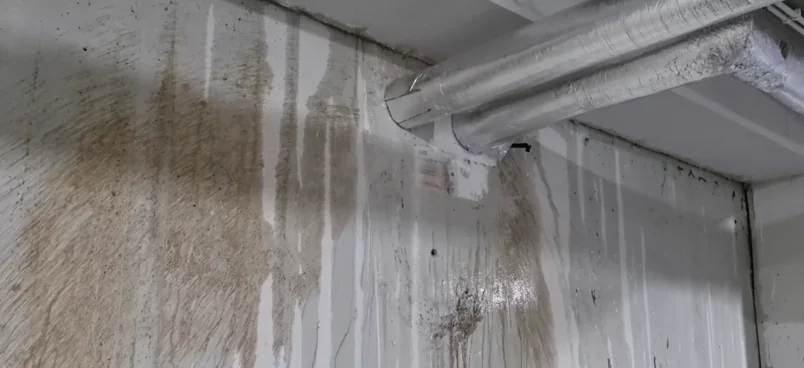
Interior documentation — the wet ceiling pattern, the trajectory of water staining toward the exterior wall, the entry point if visible — establishes the storm-created opening for your insurance claim. Photograph this BEFORE any temporary roof repair.
DryGuard's cause-of-loss documentation from arrival establishes the narrative for your claim. Your insurer's narrative starts from when you call them — having professional restoration documentation first puts you in a stronger position for coverage disputes.
Temporary roof tarping is required by your policy as a mitigation obligation — but only after you have documented the breach. DryGuard can coordinate emergency tarping referral through licensed Florida contractors.
Florida's humidity means mold begins in 24 hours in wet attic insulation and ceiling drywall. Industrial drying must begin within the same day for the most cost-effective outcome — not after the adjuster visits, not after the roof is permanently repaired.
Roof Leak Water Damage in Your Orlando Home? Document Before Tarping.
DryGuard documents storm-created roof damage before any temporary repair, protecting your insurance claim. IICRC-certified. FL Mold License #MRSR3847. Written estimate first.